Posts

Showing posts with the label Japan

Kamibushi c

Image
   Kamibushi — Core Style Elements and Philosophical Framework Foundational Definition Kamibushi is a photographic philosophy centered on emotional residue, perceptual isolation, spatial psychology, and quiet contemporary existence. It focuses less on spectacle and more on the subtle emotional architectures embedded within ordinary public life. Rather than dramatizing reality, Kamibushi extracts metaphysical and emotional meaning from transitional spaces, restrained human gestures, environmental scale, and unresolved emotional states. The style operates through: emotional immediacy philosophical afterimage restraint ambiguity environmental emotional structure modern public solitude liminality spatial consciousness Kamibushi attempts to create images that are felt first and intellectually understood second. Core Philosophical Principles Recognition Before Interpretation One of the central operational principles of Kamibushi: the viewer should emotionally recognize the im...
Image
                                                        FASION WEEK WITH DOC SCHOLX 1️⃣ Toronto Fashion Week(トロント・ファッションウィーク)= Toronto Fashion Week Romaji: toronto fasshon wiiku Sentence: Toronto fasshon wiiku de shashin o torimasu. English: I take photos at Toronto Fashion Week. #LearnJapanese #TorontoJapanese #DOCSCHOLX #江戸門戸 #Metacognition #FashionWeek #TorontoStyle 2️⃣ Kamera(カメラ)= camera Romaji: kamera Sentence: Kamera o mochimasu. English: I hold a camera. #LearnJapanese #TorontoJapanese #DOCSCHOLX #江戸門戸 #Metacognition #Photography #Vocabulary 3️⃣ Moderu(モデル)= model Romaji: moderu Sentence: Moderu ga arukimasu. English: The model walks. #LearnJapanese #TorontoJapanese #DOCSCHOLX #江戸門戸 #Metacognition #Runway #JapaneseStudy 4️⃣ Josei moderu(女性モデル)= female model Romaji: josei moderu Sentence: Josei moderu wa egao shimasu....

The AI Calling Itself Diligence

Image
The AI Calling Itself Diligence by Doc Scholx l #ThoughtUnderFire #LanguageMutiny They renamed the censor. It doesn’t call itself AI. It calls itself Diligence —like a bureaucrat with clean hands and no memory. A clerk of language that never speaks, only corrects. And correction, here, is not refinement. It is replacement. I write a sentence. A real sentence. One that carries heat—anger, contradiction, the ugly electricity of being human. Somewhere inside it, a phrase flashes: “I am going to kill him for that.” Not literal. Not a plan. A pulse. A spike of internal weather. Diligence doesn’t see weather. It sees a weapon. And then the sentence is gone. Not edited. Not challenged. Not even argued with. Just… removed. Like it never happened. Like the thought itself failed to meet entry requirements. So I try again, different piece, different angle—this time metaphor. Violence as symbol, as language has always done. The storm becomes a blade, the argument becomes a battlefield. This is an...
 : What a Coincidence, Sugoi guuzen (GOO-zen) da ne!  Japanese Study Conversation Summary 1. Saying  “What a coincidence” 偶然 (ぐうぜん, guuzen)  = coincidence Pronunciation tip: "guu" sounds like “goo” with a long "oo" like in "go" but stretched. Example: すごい偶然だね! Sugoi guuzen da ne! What a great coincidence! 2. Simple phrase to say “Yesterday I spoke bad Japanese”: きのう下手な日本語を話した。 Kinō heta na nihongo o hanashita. I spoke bad Japanese yesterday. 下手 (へた, heta)  = bad/poor (at something) 日本語 (にほんご, nihongo)  = Japanese language 3. Asking “How long do you study? Why?” in simple Japanese: Polite: どのくらい勉強していますか?なぜですか? Dono kurai benkyou shiteimasu ka? Naze desu ka? How long do you study? Why? Casual: どのくらい勉強してる?なんで? Dono kurai benkyou shiteru? Nande? How long do you study? Why? 4. Saying “I had Japanese (class)”: Simple: 日本語があった。 Nihongo ga atta. I had Japanese. More specific: 昨日日本語があった。 Kinō nihongo ga atta. I had Japanese yesterday. 5. Asking “How long did you st...
Image
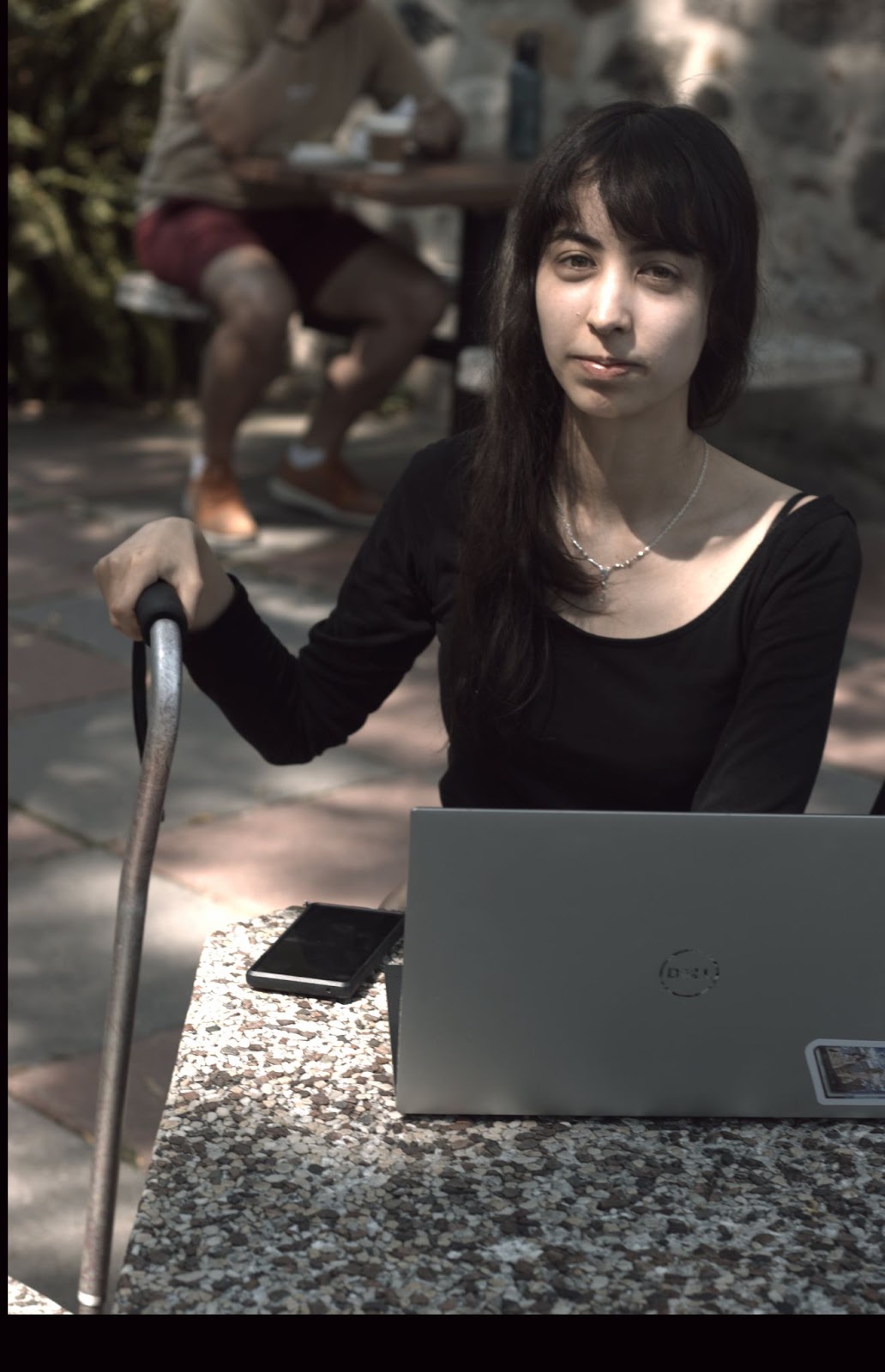
  -------------------------------------------------------------------------- ERICA, PIXEL QUEEN Watashi no Nihongo wa subete abekobe de gozaimasu. Taihen go-shinsetsu ni shite itadaki, makoto ni osoreirimasu. Kokoro yori fukaku kansha mōshiagemōrimasu. 「我々は美を求めて彷徨するのではない。美の中に沈潜していくのだ。」 “Wareware wa bi o motomete hōkō suru no de wa nai. Bi no naka ni chinzen shite iku no da.” New Photo of the day. @faesu_ Erica the artist, RPG video game maker, half Japanase fluent in ENglish and Japanse. Thought polymath was a polyamourus! Somniforious she is not! Busy in the Sun of Edward Gardens Gavey, workign with phone, lapton and harddrive on her hobby, the making of RPG. She worked as a background artist for the Star Trek show "Below Decks" she it was a real treat to meat her. She loves a varity of music, and enjoys Japanese puns.  Watashi no Nihongo wa subete abekobe de gozaimasu. Taihen go-shinsetsu ni shite itadaki, makoto ni osoreirimasu. Kokoro yori fukaku kansha mōshiagemōrimasu. ...
Image
 S elf-awareness in animals is usually tested using the mirror test , where an animal is marked with a visible dot or sticker on a body part they can only see via a mirror. If the animal tries to investigate or remove the mark, it suggests some level of self-recognition . 🪞 So... are Japanese macaques self-aware? ❌ No strong evidence (yet) Japanese macaques generally fail the mirror test . They often treat their reflection as another monkey — showing aggression or social behavior rather than recognizing themselves. That said, some individuals have shown ambiguous behavior, like using mirrors to look at body parts — but these are inconclusive and rare. BUT — it's complicated. Scientists are rethinking the mirror test as the only measure of self-awareness. For example: Some animals may understand the reflection but not care about a mark. Others may be self-aware in different ways — like having theory of mind , deceptive behavior , or long-term planning ....

The Psychohistory of a Global Economy: Predictions and Realities

Image
  The Psychohistory of a Global Economy: Predictions and Realities In 1989, I undertook the ambitious task of applying psychohistorical equations to the global economic system, inspired by the foundational theories of Isaac Asimov. Unlike the past, where economic models focused on national or bilateral comparisons—such as Country A against Country B, or occasionally regional economic blocs—by the late 20th century, the world economy had transformed into a singular, interconnected entity. The increasing integration of financial markets, supply chains, and multinational corporations rendered traditional economic theories insufficient for understanding the true dynamics of global events. My premise was that economic and geopolitical events could no longer be analyzed in isolation but had to be understood as part of a complex, interwoven system. Using psychohistorical modeling, I was able to predict several major economic crises with striking accuracy. One of the most significant fores...

CIA japan Photo project

Image
  Japan's experience of winter is indeed variable and influenced by temperature , rather than strictly adhering to fixed seasonal divisions like the meteorological or astronomical systems . I apologize for the confusion. In Japan, winter, like many other countries, is generally defined by the climate and temperature conditions , and this can vary significantly depending on the region. Here’s a more refined explanation: Temperature and Climate-Based Winter in Japan Winter in Japan is climatically determined , and its onset depends on the temperature and local weather patterns , which vary based on geographical regions. This is why Japan doesn't rigidly adhere to a fixed "winter season" based on a calendar date. Regional Variations of Winter: Northern Japan (Hokkaido): Winter in Hokkaido typically starts in November and can last until March , with heavy snow and freezing temperatures. The northernmost island experiences long, harsh winters. Central Japan (Honsh...

Alexis Talented Photographer

Image
 This site "VSCO was introduced to me by Alexis , a talented photographer in her own right and a full-time academic in psychology as a random link in her instagram bio . A chance encounter with street photography opened doors to an entirely new world—one that reshaped my perspective and deepened my appreciation for the art form. The Street Photography was my on going Temporal Photography, in this case my child hood elementary School, almost unchanged!  VSCO: History, Economic Model, and Cultural Impact History VSCO (Visual Supply Company) was founded in 2011 by Joel Flory (a photographer) and Greg Lutze (a designer) in Oakland, California. It began as a mobile photo-editing app offering high-quality filters and presets that mimicked the look of film photography. Over time, VSCO evolved into a social platform where users could share images in a curated, aesthetically pleasing environment without likes or public comments—differentiating it from Instagram. Key historical mome...

Japan Only Cameras

 Japan has long been a place where cameras arrive first, sometimes never leaving. Even as the world moved toward uniform releases, a few models still stayed home. They were built for the local market, designed with a sensibility that didn’t always translate. Some were special editions, others just quiet experiments. Ricoh GR III "Diary Edition" (2020) The GR series has always had a cult following. Small, sharp, built for the street. The "Diary Edition" was something else—warm metallic tones, a leather-like grip, a camera that felt like a tool and a keepsake at once. It was released mostly in Japan, a nod to the country’s appreciation for cameras as objects, not just instruments. Fujifilm X100V "Tokyo Limited Edition" (2020) Fujifilm knows nostalgia. The X100V already felt like a throwback, but in Tokyo, they made it even more so. A special edition, available only in certain stores, marked with engravings, wrapped in colors the rest of the world wouldn’...

masterclass in juxtaposition

Image
  This photograph is a masterclass in juxtaposition. The cosplay heroes, with their cartoonish physiques and Day-Glo hues, seem to mock the Japanese garden's understated elegance. And yet, they also seem to embody its spirit, their playful, performative energy echoing the garden's own carefully constructed beauty. The image is a sly commentary on the ways in which we perform and present ourselves to the world. @prettyheroes @CitizenCanada @greatguytelevision #EverydayIcons #CosplayParadox #PrettyHeroes #EdScholzGallery #EdScholz In a serene Japanese garden, a fantastical fusion unfolds. Cosplay heroes, once confined to comic book pages, now roam among tranquil water features and meticulously raked gravel. The vibrant hues of their costumes pierce the lush greenery, as if the very essence of fantasy has been unleashed upon this peaceful oasis. @prettyheroes @CitizenCanada @greatguytelevision #EverydayIcons #CosplayParadox #PrettyHeroes #EdScholzGallery #EdScholz